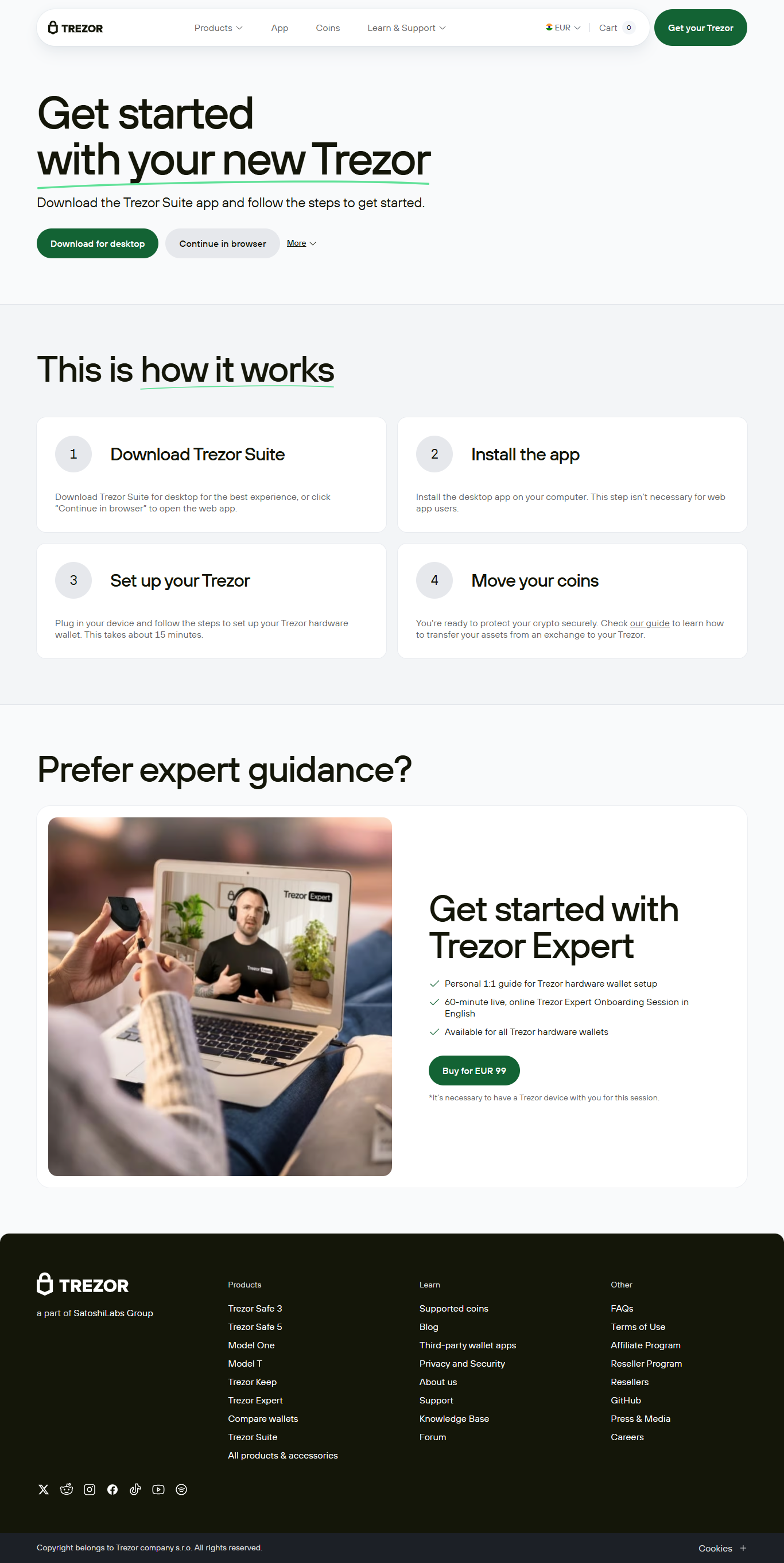
Welcome to Trezor — Your Gateway to Secure Crypto
Your Trezor hardware wallet provides a simple, powerful way to protect the private keys that control your cryptocurrency. A hardware wallet stores your secrets offline, away from malware, phishing attacks, and insecure networks. This page is designed to guide you through a secure login experience — whether you’re unlocking your device, connecting to a trusted wallet application, or performing a recovery.
Before you connect, please confirm you’re interacting with the official Trezor interface and that your device firmware is up to date. Never reveal your 12–24 word recovery seed to any application, website, or person. Trezor devices prompt you to confirm every important action on the device screen itself — a vital step that prevents remote attackers from authorizing operations without your consent.
Why a hardware wallet matters
Custody of private keys is the core responsibility of every cryptocurrency owner. Software-only wallets (mobile, desktop, or browser extensions) are convenient but expose keys to your device’s operating system. A hardware wallet like Trezor isolates keys in a tamper-resistant environment and forces physical confirmation for high-risk actions.
Quick safety checklist
- Always verify the device’s screen prompts before confirming an action.
- Keep your recovery seed private and offline. Use a metal backup plate when possible.
- Use a strong PIN and enable passphrase protection if you need plausible deniability or additional account separation.
- Only download wallet software from official sources. Check signatures when available.
If you’re new to Trezor, take a moment to read the official setup guide and follow the device’s step-by-step instructions. If you’re returning, ensure the device boots normally and shows the correct manufacturer logo before you proceed.
Need help? Visit the official Trezor support portal or community forums for step-by-step troubleshooting and best practices.